


"How long will it take?" is usually the second question a buyer asks, right after price — and it is the one that decides whether a project ships on time or quietly slips a launch date. The trouble is that suppliers answer with a single number, as if lead time were one block. It is not. It is a chain of stages with different owners, some of which can run in parallel and some of which cannot be hurried at all. This article breaks the chain down process by process, gives you a backward planning formula you can fill in for your own project, and separates the stages you can genuinely compress from the ones where a promise of speed is just a promise.
What "lead time" actually measures
Before comparing two suppliers' lead times, make sure they are measuring the same thing. In metal part sourcing, four different clocks get called "lead time":
- Quotation lead time — from drawing sent to price returned. Not part of production, but it eats your calendar.
- First-order lead time — from purchase order to first shippable parts. This includes everything that happens once: programming, tooling, first-article inspection.
- Repeat-order lead time — with programs, fixtures and inspection records already on file. Usually much shorter than the first order, which is why the two should never be quoted as one number.
- Transit and receipt — ex-works, FOB, or delivered duty paid. A delivery date quoted ex-works is not a delivery date at your dock.
Ask which clock a quoted number refers to, and whether it is a working-day or calendar-day figure. A surprising number of "late" deliveries are actually two parties measuring different intervals. The rest of this article is about first-order lead time, because that is the one that decides a launch schedule.
The lead time chain, stage by stage
From PO to shipment, a metal part passes through the same sequence regardless of process. What changes is how heavy each stage is:
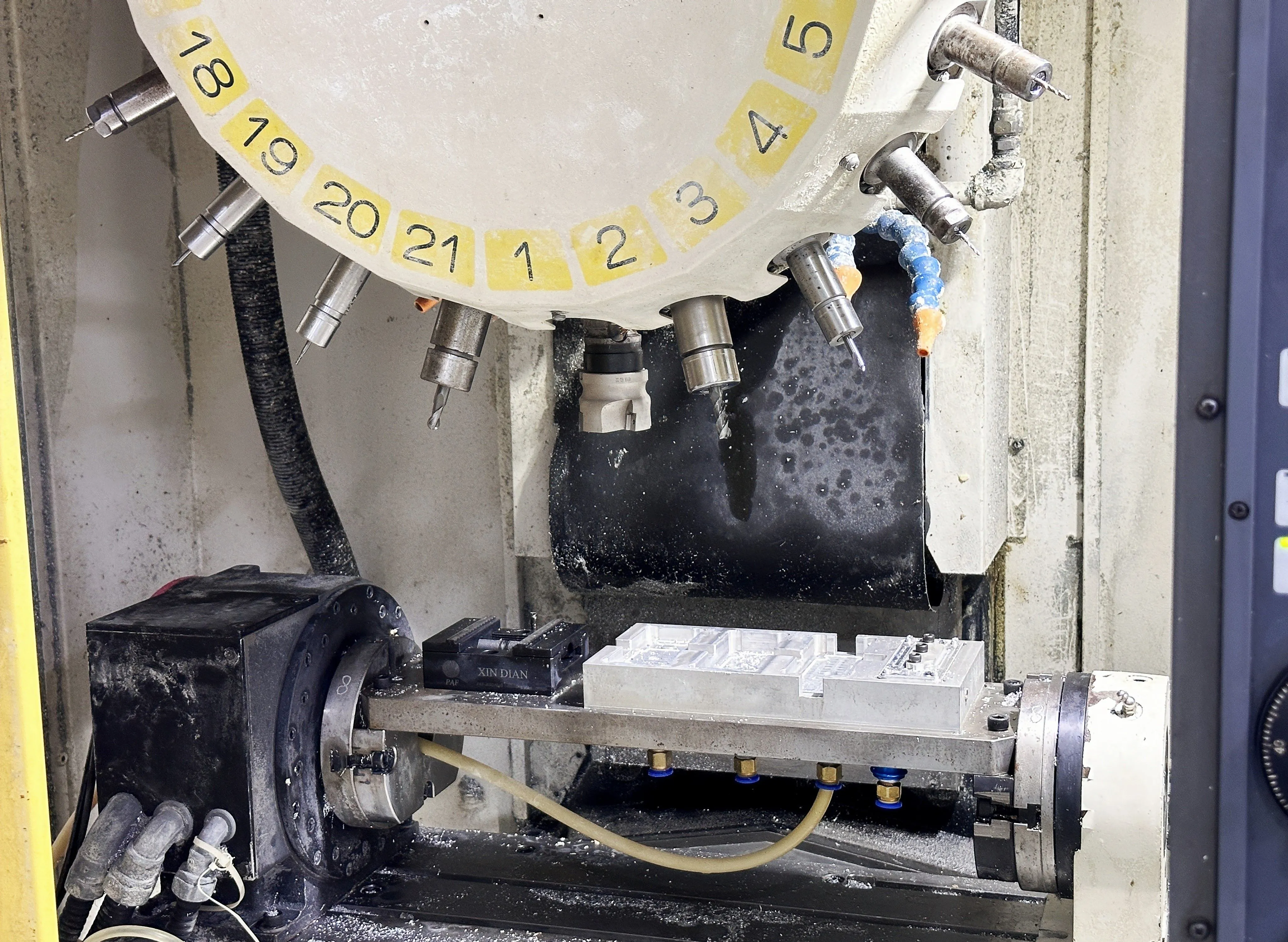
- Engineering preparation. Drawing review, process routing, CAM programming, fixture design. Invisible work, but it is where a large share of first-order time sits for machined parts.
- Material procurement. Standard bar stock and common sheet grades move quickly; a specific alloy, a special temper, or a non-standard section does not. This stage is often the one buyers forget entirely.
- Tooling build. Only for die casting, stamping, extrusion and investment casting — but when present, it dominates the schedule. See the tooling section below.
- Setup and first article. Fixture installation, tool setting, first-piece run, dimensional verification and sign-off before the batch proceeds.
- Production run. The part count multiplied by cycle time, divided by the number of available machines and shifts. This is the only stage that scales linearly with quantity.
- Secondary operations. Deburring, heat treatment, welding, grinding, and surface finishing — frequently outsourced, frequently the bottleneck nobody planned for.
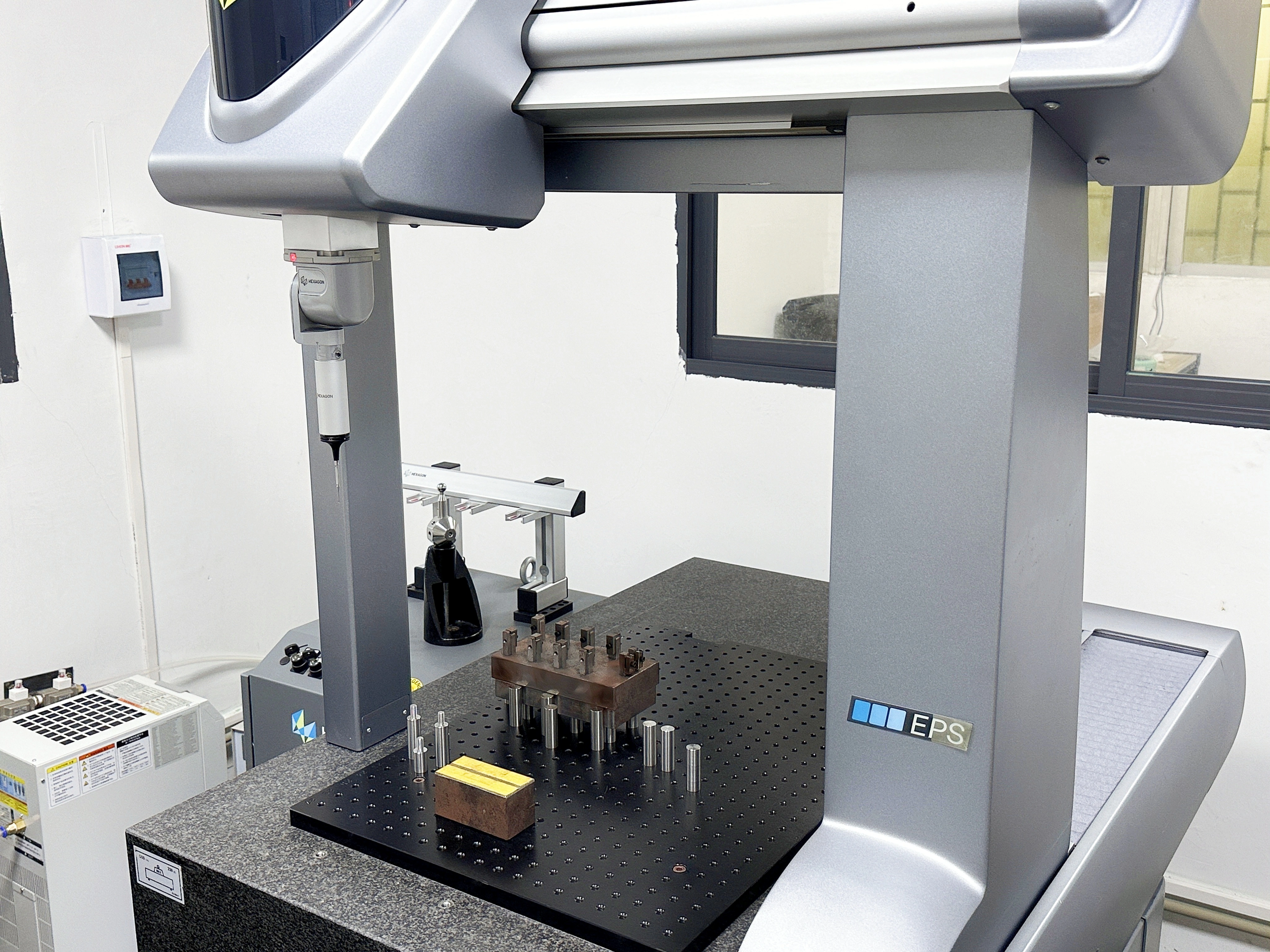
- Final inspection, documentation and packing. Dimensional report, material certificates where required, protective packing for finished surfaces, and shipping documents.
The key structural insight: stages 1–4 are largely fixed per order, while stage 5 scales with quantity. That is the same fixed-versus-variable split that shapes unit price at different volumes — it simply plays out on the calendar instead of the invoice.
How the stages differ by process
The table below compares where the calendar goes for five common routes. The numbers are illustrative shares of a first-order schedule, not commitments — the point is which stage owns the critical path for each route:
| Route | Heaviest first-order stage | What scales with quantity | What cannot be rushed |
|---|---|---|---|
| CNC machining from stock | Programming, fixture preparation, first article | Cutting time per part | First-article verification; special material procurement |
| Die casting + finish machining | Die design and build, trial shots | Shot cycle and machining time | Die steel cutting, trials and corrections |
| Metal stamping | Progressive die build and tryout | Press strokes per part | Tryout iterations on formed geometry |
| Extrusion | Profile die and first-run qualification | Line run length plus cutting | Die proving; profile change means a new die |
| Investment casting | Wax die, shell building and pouring cycles | Shell and pour batch size | Shell drying and cooling cycles |
Two patterns are worth reading off the table. Machining has no tooling stage at all, which is why it is the fastest route to a first part — see our prototype fabrication guide for how that is used to de-risk a programme. Every casting and forming route, by contrast, puts a physical tool on the critical path before a single production part exists. That single difference explains most of the gap between a two-week machining order and a tooling programme measured in weeks.
A backward planning formula you can actually use
Instead of asking "how fast can you make it?", start from the date the parts must be at your dock and work backwards. The arithmetic is plain:
Latest PO date = required dock date − (transit + documentation & packing + final inspection & release + secondary operations + production run + setup & first article + material procurement + tooling build, if any)
Use it as a worksheet, not a slogan — fill one line per stage with a duration you have confirmed with the supplier, and mark which lines can overlap:
| Stage | Your project (fill in) | Owner | Can it run in parallel? |
|---|---|---|---|
| Engineering preparation | Supplier | Yes — with material procurement | |
| Material procurement | Supplier / mill | Yes — with programming and fixture build | |
| Tooling build (if any) | Tool shop | Partly — machining of fixtures can overlap | |
| Setup and first article | Supplier | No — everything before it must land first | |
| Production run | Supplier | Partly — multi-machine or multi-shift | |
| Secondary operations / finishing | Supplier / finisher | Partly — overlapping batches | |
| Final inspection, packing, docs | Supplier | No — last in line | |
| Transit to your dock | Forwarder | No |
Then add a buffer to the stages you do not control: material procurement, outsourced finishing, and freight. A schedule with no buffer is a bet that nothing goes wrong anywhere in the chain. When a supplier gives you one number, ask them to fill in this table — the exercise alone usually surfaces the real bottleneck.
What you can compress, and what you cannot
Compression levers exist, but they are not evenly distributed. Splitting them honestly saves everyone a difficult call three weeks later.
- Genuinely compressible: parallel engineering and material procurement; overlapping production batches through finishing; reserving machine capacity in advance; consolidating several part numbers into one release; standardising on stocked alloy and section sizes; choosing a finish with a short, in-house queue; simplifying packaging requirements where surfaces allow.
- Partly compressible, at a cost: adding shifts or machines to the production run; expedited freight; prioritised scheduling that displaces other orders — these usually move cost, not just the calendar, and the price effect is the same arithmetic as the one in our machining cost breakdown.
- Not compressible: die or mould steel cutting and trial corrections; shell drying and cooling cycles in investment casting; first-article dimensional verification; calibration-dependent inspection; material mill lead time for a non-stock grade. Any supplier who promises to compress these is either skipping a step or assuming a risk that will surface as a quality problem.
There is a fourth category worth naming: decisions you can remove. A design review that cuts one secondary operation, or replaces a special finish with a standard one, removes a whole stage from the chain rather than shortening it — the same logic as the drawing-stage levers in our design-to-cost guide.
Where design decisions quietly add days
Buyers often treat the drawing as fixed and the schedule as the supplier's problem. In practice several drawing features map directly onto calendar time:
- Tighter tolerances on many dimensions. More finishing passes, more in-process checks, and a longer first-article review. Tight tolerances on the few functional features are fine; tight tolerances everywhere buy nothing and cost both time and money.
- Specified surface treatments. Some finishes need an external line with its own queue, and some need masking of critical faces before and after. The finishing route should be settled at quotation, not after machining.
- Non-standard material or section. A mill order with its own lead time can exceed the entire machining run.
- Deep cavities, thin walls, or awkward access. These drive extra setups, special tooling and slower, more cautious cutting — and they raise scrap risk during first-article proving.
- Late design changes. After programming and fixture build, a revision restarts stage one. Version control on the print is a scheduling tool.
Why prototypes and repeat orders move faster
First orders carry the one-off work; repeat orders do not. Once CAM programs, fixtures, tool lists and inspection plans are on file, they do not need to be recreated — which is the calendar equivalent of the fixed-cost dilution described in our low-volume versus high-volume analysis. Three practical consequences:
- Quote first and repeat lead times separately. A single blended number will be wrong for both.
- Keep programs and fixtures in the supplier's custody. Ask how records are retained, and whether a repeat order after a long gap still needs a fresh first article.
- Use a prototype run to pull risk forward. Machining a handful of parts from stock proves the geometry before tooling starts, so the die is built against a design that has already been assembled and checked — see our prototype route.
Finishing and inspection: the tail that gets forgotten
In experienced planning, the last two stages cause more slipped dates than machining itself. Surface finishing often runs at a separate line with its own batching rules and minimum lots; a colour or coating requirement can add trial panels and approval before the batch is accepted. Final inspection needs the drawing, the gauge plan, and a decision on what happens to out-of-tolerance parts — a dispute at this stage stops the whole order, not just one piece.
Ask for the finishing and inspection plan at quotation: where each happens, what the queue looks like, what documents will accompany the shipment, and who signs off. These are the same records that a capability review would look for, and having them agreed in advance is the cheapest schedule insurance available.
Tooling routes: the die is on the critical path
For casting, stamping and extrusion, the tool is both a cost item and a schedule item. Die design, steel cutting, assembly, trial shots, measurement and correction form a sequence that cannot be parallelised away, and each correction loop adds another cycle. The commercial structure of that investment is covered in our tooling amortization guide; on the calendar side, three checks matter:
- Is the design frozen? A change after steel is cut can restart the build. Freeze the print first.
- Who owns the trial loop? Ask how many trial-and-correction cycles are included and how results are reported.
- What happens after the tool is proven? Once the die is qualified, unit lead time falls sharply — which is where high-volume die casting programmes become predictable to schedule.
If your delivery date cannot accommodate a tool build, machining from stock is the honest answer. Saying so early is more useful than a compressed tooling promise that will not hold.
Eight questions to ask before you commit the PO
| # | Question | Why it matters |
|---|---|---|
| 1 | Is this first-order or repeat-order lead time? | The two differ by all the one-off work |
| 2 | Can you break the number into stages? | Exposes the real bottleneck instead of one opaque figure |
| 3 | Is the quoted date ex-works or delivered to our dock? | Freight and documentation are part of your schedule |
| 4 | Is the material a stocked grade and section? | A mill order can dominate the whole chain |
| 5 | Is finishing in-house, and what is its batching rule? | Outsourced queues are a common hidden delay |
| 6 | What documents ship with the parts, and who signs off? | Prevents an end-of-line hold |
| 7 | Which stages can run in parallel, and which are sequential? | Shows whether compression is real or claimed |
| 8 | What happens if the drawing changes mid-order? | Establishes the version-control rule before it is needed |
How speed interacts with price
Lead time and unit price are not independent. Expediting usually means reserved capacity, smaller batches, split setups or faster freight — each of which shows up in the quotation. Consolidating part numbers into one release lowers cost and shortens total elapsed time at once; splitting a batch to get a partial shipment early does the opposite. The useful framing is to treat schedule as a cost driver you can choose, rather than a constraint discovered afterwards: decide which stages are worth paying to compress, and let the rest run normally. Our volume and batching analysis sets out the price side of the same arithmetic.
Buyer checklist before you approve a delivery date
| # | Check |
|---|---|
| 1 | Which clock the quoted number refers to, and its incoterm |
| 2 | Stage-by-stage breakdown with owner for each line |
| 3 | Backward worksheet filled from required dock date |
| 4 | Buffer added to stages outside the supplier's control |
| 5 | Material grade and section confirmed as stocked |
| 6 | Finishing and inspection plan agreed at quotation |
| 7 | Tool build, trial loops and freeze date stated if a die is needed |
| 8 | Drawing version control and change-order rule agreed |
| 9 | Repeat-order lead time quoted separately |
| 10 | Documentation and sign-off owner named before production starts |
Questions we get asked
How long does a custom machined part usually take?
It depends far more on the one-off stages than on cutting time. For a first order, programming, fixture preparation, material procurement and first-article verification dominate; the production run itself scales with quantity. Ask for the number broken into those stages rather than a single figure, and ask separately for repeat-order lead time — with programs and fixtures on file it is a different, shorter schedule.
Can a metal part order be expedited?
Some stages, yes: engineering and material procurement can run in parallel, capacity can be reserved, and freight can be upgraded. Others cannot: die trial loops, first-article dimensional verification, and mill lead time for a non-stock grade. A useful test is to ask which specific stage the supplier intends to shorten — if the answer is "the whole order", the promise is not a plan.
Why is the second order faster than the first?
Because the fixed work is already done. CAM programs, fixtures, tool lists, inspection plans and accepted first-article records carry over, leaving material, the production run and final checks. That is why first and repeat lead times should be quoted separately, and why it is worth asking how those records are retained between orders.
Does a tighter tolerance change the delivery date?
It can. Tighter tolerances on many dimensions mean additional finishing passes, more in-process measurement, and a longer first-article review — and they raise scrap risk during proving. Applying tight tolerances only to functional features, and leaving general tolerances elsewhere, is one of the simplest ways to protect both the schedule and the price.
What should be in the quotation to make the date reliable?
A stage breakdown, the incoterm, the material assumption, the finishing and inspection plan, and the document package that ships with the parts. If any of those is missing, the quoted date rests on assumptions neither side has written down.
Send the drawing and the date you need it
Send your part with the required dock date and quantity. We break the schedule into stages, state which ones can be compressed and which cannot, and put the assumptions in writing — so the delivery date is a plan you can check, not a number you have to trust.
Request a Quotation